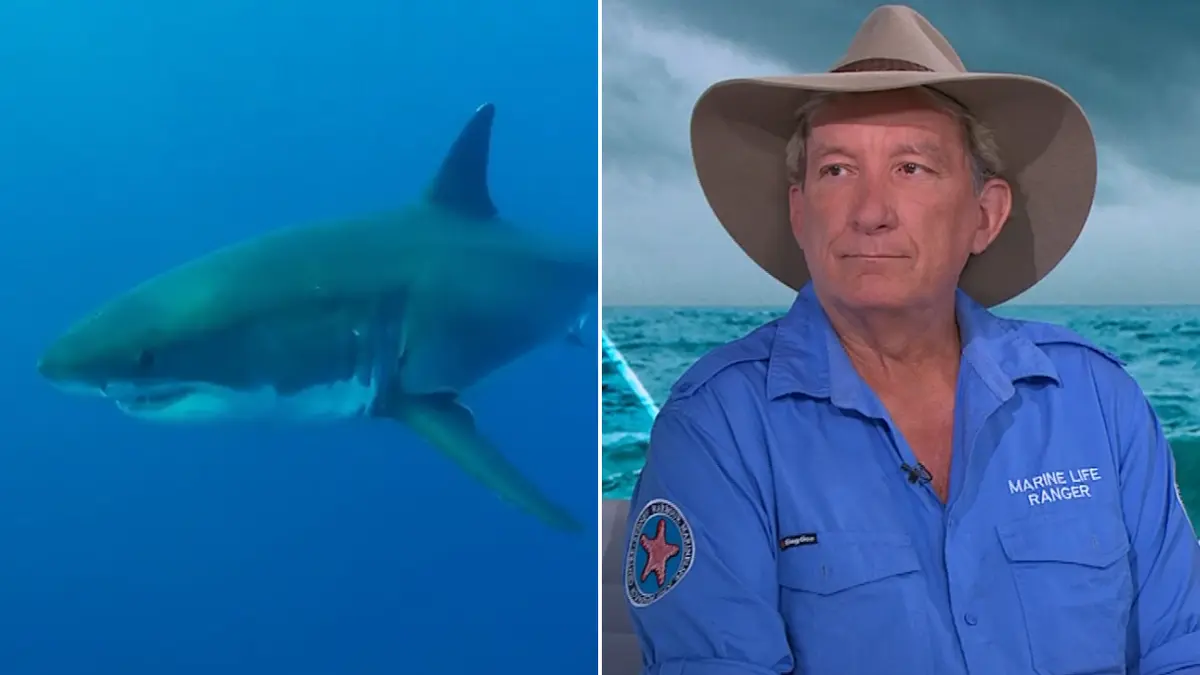

The tragic death of a West Australian father while spearfishing has renewed warnings from marine experts that some common ocean activities may be inadvertently attracting sharks closer to people.
Daniel Turpin, 35, was spearfishing with his family off the coast of Albany, in southern Western Australia, on Saturday when he was attacked by a shark reported to be about 4.5m long.
WATCH THE VIDEO ABOVE: Third fatal shark attack claims spearfisherman’s life
Know the news with the 7NEWS app: Download today
His death is the third fatal shark attack in Australia in less than a month, prompting fresh concerns for swimmers and spearfishermen as winter migration patterns bring more sharks to the Australian coast.
Senior marine life ranger David “Sharky” Baxter told Sunrise on Monday that spearfishing was a recurring factor in recent attacks because it can draw sharks from considerable distances.
“What people don’t realise is that a shark can hear a speared, distressed fish up to a kilometre away,” Baxter explained.
“So then, as it tunes in there, it goes through, and then it uses its other sensors. And then it can pretty much investigate further.”
Baxter said many people underestimated how easily sharks could be attracted by fishing activity.
“I don’t think they realise that just by hooking a fish is enough to bring a shark off its swimming pattern in to investigate it further,” he said.
Swimmers are also at risk, he said.
Splashing in the water can create low-frequency vibrations that may prompt sharks to investigate.
The warning comes as authorities continue to examine a cluster of fatal shark attacks around the country, with experts noting that seasonal shark movements often increase during the cooler months.
While Baxter acknowledged shark attacks could never be completely eliminated, he argued Australia needed to invest more heavily in prevention and research.
“We’re never going to stop shark attacks… but we can do a lot more,” he said.
“We can tag a million sharks. We know where they go, but we’ve got to do a lot more. We’ve got to become more proactive.”
Baxter is calling for the establishment of a dedicated federal shark research unit focused on developing technologies and strategies that could reduce the likelihood of shark bites.
“We’re very smart people, Australians. We’ve got to set up a federal shark research unit,” he said.
He said future research should focus on deterrents and prevention measures rather than simply tracking shark movements, arguing there was more that could be done to reduce the risk of encounters in the water.