
In January last year, as outgoing minister for the National Disability Insurance Scheme, former Labor leader Bill Shorten declared the scheme was no longer the government’s “major problem child”, adding “there is bipartisan agreement about the path of sustainability”.
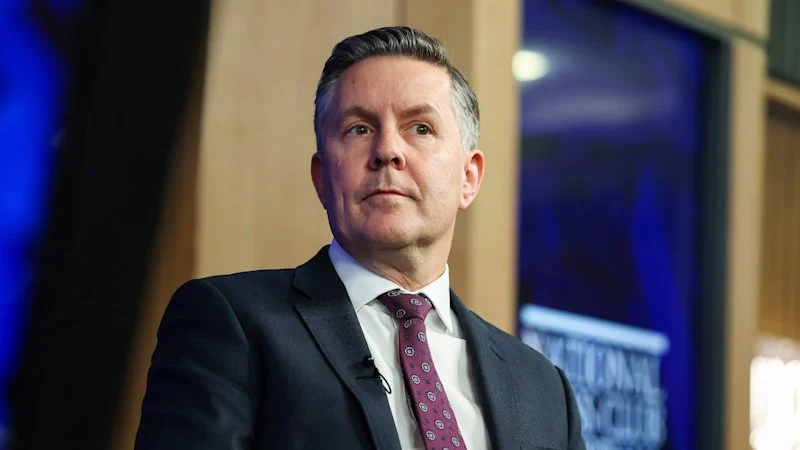
The “child” delivered by Julia Gillard’s government in 2013 is now a teenager, and its problems are still very much with us. When Health Minister Mark Butler fronted the National Press Club this week to set out the government’s latest thinking on “the path of sustainability”, the message was startling.
The Albanese government inherited an NDIS on a 23 per cent growth curve. By the time of Shorten’s parting message, that figure had been pared back to 8 per cent. Butler wants that number down to 4 per cent this year and 1 per cent in the years to follow.
The number of people on the scheme would, in this vision, be reduced to 600,000 by this decade’s end. That’s down 160,000 people from where we are now, but given projections would have 900,000 people on the scheme by 2030, it represents 300,000 people who might otherwise have expected some form of assistance.
It has long been clear something is seriously awry with this scheme. The Productivity Commission, which initially designed the NDIS to cover 410,000 people and cost about $13.5 billion a year, in 2017 forecast that it would cost $40 billion by 2030. Instead, it now costs $50 billion and is on track for $70 billion by that year.
A scheme meant to provide for the permanently and significantly disabled has somehow ended up rivalling national spending on defence and Medicare. On Wednesday, Butler identified eight design flaws, including the lack of effective registration of service providers and the use of diagnosis alone to determine access.
By widening mandatory registration and using assessment of individuals’ functional capacity as the basis for access, the minister hopes to address these problems. The Age welcomes these moves, particularly if they close the door to unqualified and even criminal operators profiting from money meant for vulnerable Australians.
At the broader level, Butler and the government have decided the nettle must be grasped on bringing the scheme back into balance. The Age would also agree with that course.
In his speech, Butler rightly argued that the NDIS, without action, stood to lose its “social licence”. At a time when the government is under enormous budget pressure and the nation is grappling with inflation and a volatile global outlook, this scheme was occupying a space far beyond its intention.
Notwithstanding the budget realities, we must also not lose sight of the human beings at the heart of this debate as thousands of families stand to lose support. Here, the government’s agility and resolve will be sternly tested.
The federal government has emphasised that those who are not deemed seriously disabled but still require some degree of help – one thinks of the many families whose children are diagnosed with autism – should be able to access state-based programs such as Thriving Kids. Butler assured his audience no one would be taken off the NDIS until those supports were in place.
But as Waleed Aly points out in a column for The Age, not all states are committed to Thriving Kids, and many of the other programs don’t yet exist. NSW Premier Chris Minns, while expressing sympathy for Canberra’s predicament, went so far as to state that “we can’t provide equivalent care in the state system”.
This is not simply a question of numbers. Federal political correspondent Natassia Chrysanthos notes that families will again fear becoming the “primary carers or advocates for their loved ones’ support in a system stacked against them”.
That should be remembered when the minister complains that one flaw in the system is the number of third parties managing claims, describing some of them as “clipping the ticket”. The scheme as it stands, and its accompanying bureaucracy, is almost impenetrable without assistance.
It would be good if a new and more streamlined NDIS could also more efficiently deal with its participants, thus removing this business model and saving money at the same time.
It will take until 2028 for the eligibility criteria of the revamped NDIS to be introduced. Consultation and “the rollout of new framework planning” will take place in the interim.
With Opposition Leader Angus Taylor having vowed “we’ll make this as bipartisan as we possibly can”, the Albanese government may believe it can minimise the political pain from this dramatic reboot of the scheme.
But like other voters, the families of those whose support is removed, cut back or placed in the hands of state agencies may declare a plague on both major parties’ houses.
As Satara Uthayakumaran writes for this masthead, “the NDIS … was built on the promise that Australians with a disability have an inherent right to live fulfilling, independent and dignified lives”.
There will be some necessary uncertainty as changes of this magnitude to a scheme of this complexity are worked through, but the clock will be ticking on public patience.
Canberra and the states need to knock their heads together and provide answers as quickly as they can for families before that fear and uncertainty imperils the licence for change.
Get a weekly wrap of views that will challenge, champion and inform your own. Sign up for our Opinion newsletter.
 The Age’s View – Since The Age was first published in 1854, the editorial team has believed it important to express a considered view on the issues of the day for readers, always putting the public interest first.