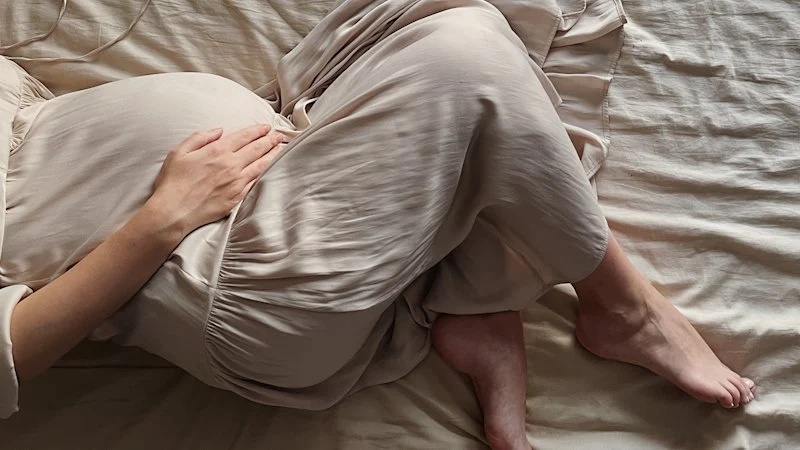


Women without children are more likely to seek mental health support services than mothers, a new study has found, prompting calls for more to be done to understand the needs of childless women amid declining fertility rates.
The University of Queensland study analysed data from more than 6000 women over a 20-year period, dividing them into four categories: mothers; women voluntarily without children; women experiencing medical infertility; and women experiencing “social infertility”, such as lacking a suitable partner.
While mental health service use increased for all women regardless of parental status, those without children did so at a higher rate, rising from 7.4 per cent in 2007 to nearly 17 per cent in 2022.
This was most prevalent for women who chose not to have children, or were childless due to fertility issues.
Infertility affects an estimated one in six couples in Australia and previous research has shown high rates of psychological distress in women who want to have children, but struggle to conceive.
But researchers said in other instances, such as when women did not want to have children, the correlation between greater mental health service use was unclear.
Dr Chuyao Jin, a researcher from UQ’s School of Public Health who happened to be childless by choice, said societal expectations was one possible explanation.
“When you choose not to have children, no matter whether it’s your personal choice or you want to have children but are facing medical or financial challenges, as you get older, you face more pressure and potentially social exclusion because you didn’t follow the social norm,” Jin said.
“Society still expects women to have children.”
Australian Women and Girls’ Health Research Centre direct Professor Gita Mishra agreed that “pronatalist” attitudes can have an adverse impact, and said social exclusion is another issue facing childless women, particularly as they aged.
“If you think about mothers, they automatically have childcare, friends, birthday parties and social events to attend,” Mishra said.
“[For childless women] as they get older, there may be a reduction in social support or a social network.”
Fertility rates in Australia have been declining since 2001, with recent data from the Australian Bureau of Statistics showing the fertility rate expected to hit a new low of 1.42 babies per woman in 2025–26.
Jin and Mishra said this reinforced the need to use studies, such as theirs, to better understand the health needs of women without children.
“In Australia alone, 16.1 per cent of women aged 45–49 were without children in 2021,” Jin said.
“We know that the prevalence of this population is increasing, but in the academic world, we know very little about them, especially their health and wellbeing.”
Start the day with a summary of the day’s most important and interesting stories, analysis and insights. Sign up for our Morning Edition newsletter.