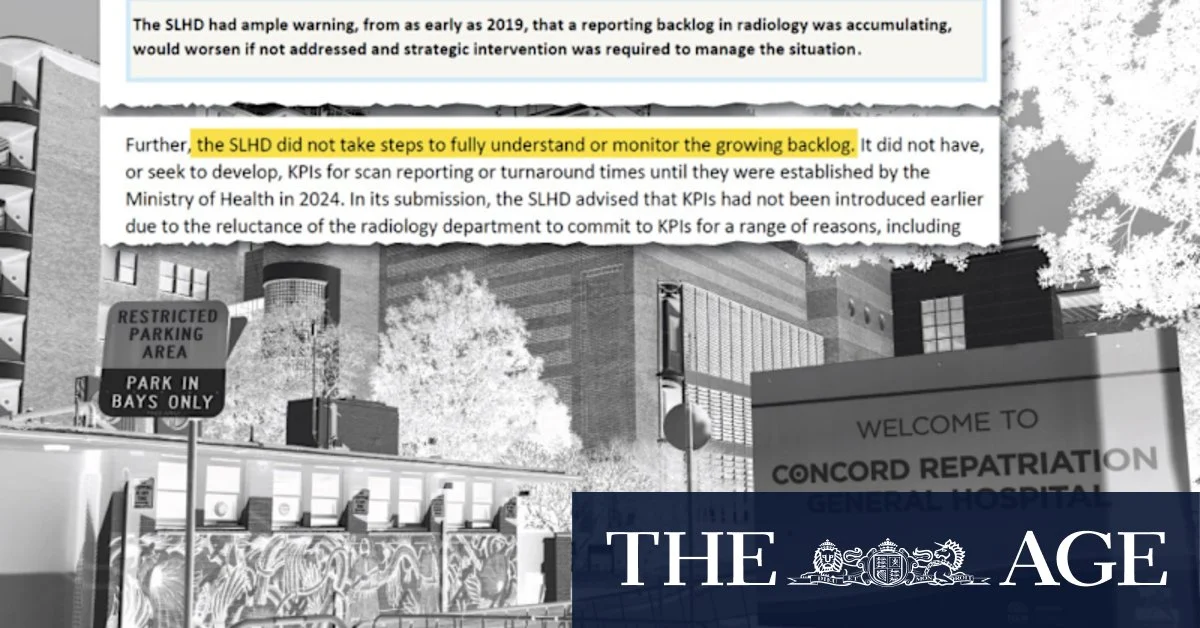

The health district argued in its submissions to the ombudsman it found only 14 “adverse incidents” affecting patients out of the 50,178 unreported scans, but the ombudsman noted the health district did not have a process for systematically identifying and addressing those risks until 2023 – “well into the backlog”.
Loading
“Whilst the number of actual adverse incidents due to the backlog was relatively low, and certain actions, such as prioritising more complex imaging over X-rays, were put in place by the radiology department early on … the conduct of the Sydney Local Health District in responding to and managing the increasing backlog of radiology studies at Concord Hospital radiology was unreasonable,” the ombudsman said.
The ombudsman said multiple factors had driven the backlog, including increases in emergency presentations, an increase in the number of scans performed due to improvements in technology, and increased clinical workload for radiologists that took them away from reporting work.
These contributed to a 9 per cent increase in images assessed at Concord between 2012 and 2023, but the report noted the number of radiologists employed in the department decreased from 2019 to 2023.
This led the hospital’s director of medical services to warn management that most radiologists were “doing more than twice the workload that was recommended in the Australian literature”.
Loading
Instead of taking steps to recruit more radiologists, an executive took the extraordinary step of instigating an internal audit of the department due to allegations radiologists “were not working their required hours” – a claim the investigation found could not be substantiated.
A cultural review announced in July 2023, after the Herald revealed the backlog of 50,000 scans, found this audit of their working hours had resulted in “a number of the state’s most experienced and highly regarded radiologists leaving the public health system”.
While the health district said at the time it was actively recruiting for two full-time radiologists, the ombudsman noted the recruitment and retention rates on offer were lower than the state average.
The backlog had been reduced to 217 studies older than four weeks by September last year.
A health district spokesperson said they were unable to comment on individual patients due to privacy considerations, but open disclosure was provided to all affected patients and their families.
“Radiology images are often reviewed by clinicians as soon as they become available, even where a formal report has not yet been produced, to inform safe and timely treatment and care,” the spokesperson said.
Start the day with a summary of the day’s most important and interesting stories, analysis and insights. Sign up for our Morning Edition newsletter.