Six camera trailers dotted across the state, as well as three fixed cameras on the Kwinana Freeway, have been operating on a cautionary basis for eight months.
That period ended on October 7, after which $13 million in fines were handed out in the next month.
The revenue from fines is being reinvested into road safety.
“If the AI system believes there is an offense, then two humans will look at those photos and make a judgment,” Road Safety Minister Reece Whitby said.
More than 12,000 motorists were caught using their mobile phones and about 10,000 drivers were snapped without a seatbelt.
“It’s beyond mind-boggling why anyone would not put on a seatbelt on,” Whitby said.
“For goodness sake, please, please exercise caution, be responsible.”
Images of drivers eating cereal, painting their nails and using nail clippers were just some of the offences caught on camera.
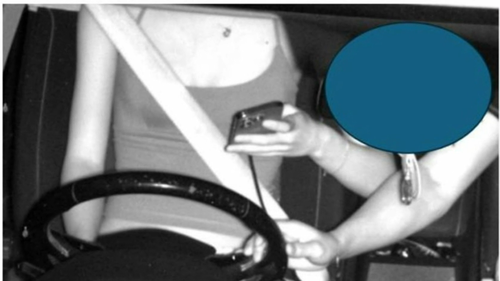
One driver was seen using her phone while her passenger steered the car.
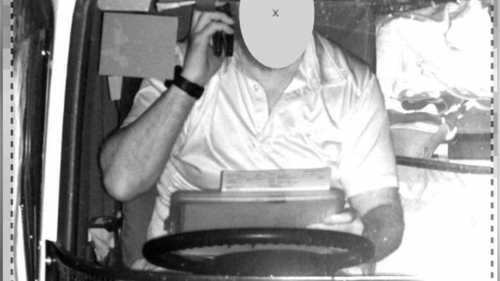
Most shocking of all, a truck driver was snapped driving at 100km/h with no seatbelt, with a mobile phone in one hand and a clipboard-shaped object in the other.
“People are normalising the car as an extension of their home, when you see some of these activities,” University of Western Australia Professor Teresa Senserrick said.
Authorities hope the cameras can help change driver behaviour as the state approaches its worst year of road fatalities in almost a decade.
Academics at the WA Centre for Road Safety Research at UWA hope a new high-tech driving simulator can help prove just how dangerous these distractions can be.
“It’s usually fractions of seconds that are the difference between either being able to avoid a crash or at least being in a low-impact crash,” Senserrick said.