
As I sat in a Perth doctor’s surgery with my young son in 2022, I had no idea how serious his condition was.
At nearly two years old, he had a snotty nose and a cough. A common cold, or so I thought.

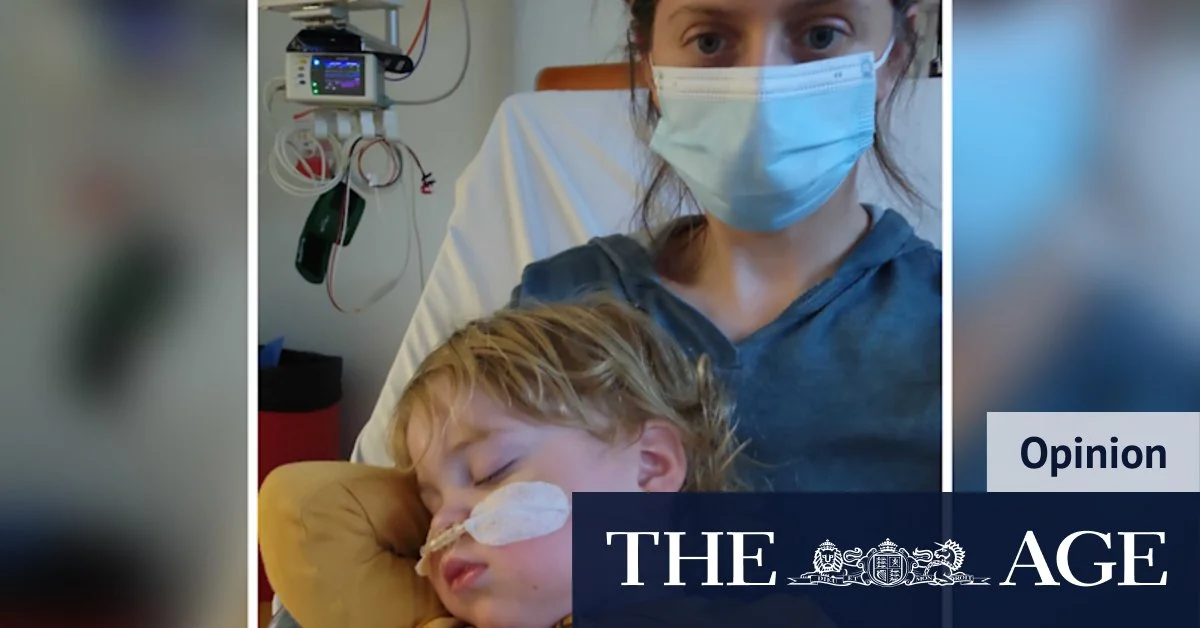
Perth mother Yvonne Ardley in hospital with her son.
The GP gave him a check over, including his oxygen saturation. It was dipping to 91 per cent.
She explained anything under 92 per cent and the patient should be in a hospital bed, hooked up to oxygen.
What happened next was a whirlwind, rushing him to Perth Children’s Hospital, before doctors stuck nasal prongs on his face and started administering oxygen.
We were told he had para-influenza, a relatively common virus which had triggered a viral-induced wheeze – similar to an asthma attack. He remained in hospital for eight days.
It unfortunately didn’t end there. Every winter since, my son has been hospitalised with different viruses, from RSV to the common cold, all triggering wheeze.
Unfortunately, his experience isn’t isolated. Hundreds, if not thousands of other WA children are admitted with virus-induced respiratory problems every year. Some doctors say these incidents became much worse post-COVID, because of our border closures.
The University of Western Australia’s head of paediatrics, Professor Peter Richmond, says the state’s COVID lockdowns meant viruses such as influenza and RSV weren’t circulating in the community, creating an immunity gap in young children.