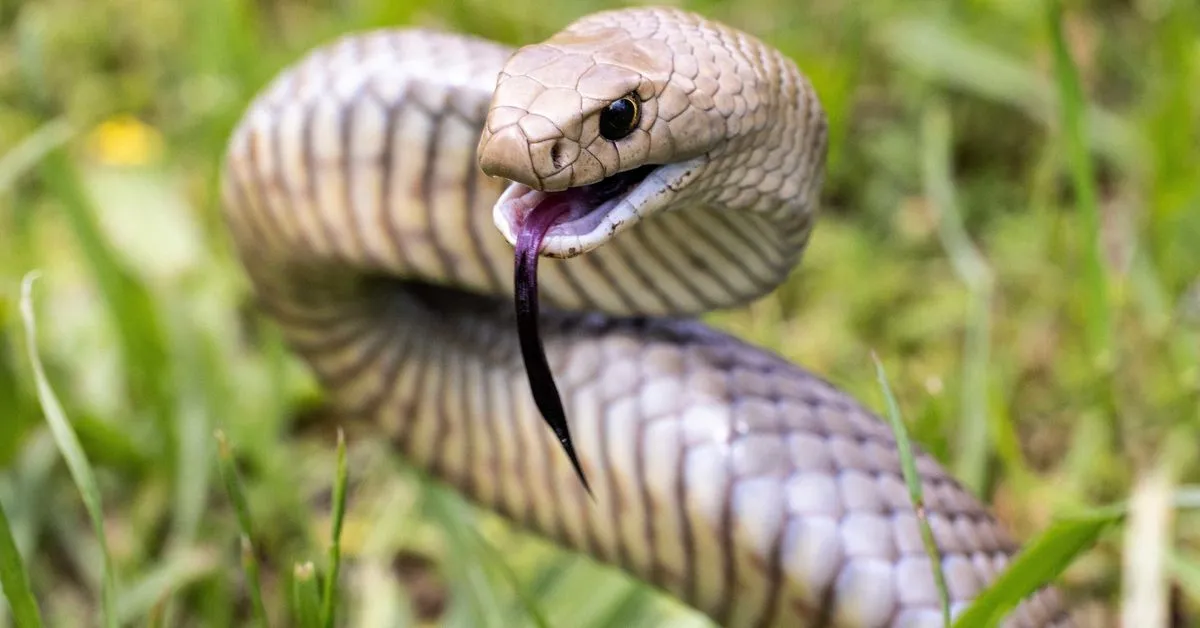

Snake bites kill approximately 138,000 people and disable a further 400,000 people worldwide each year.
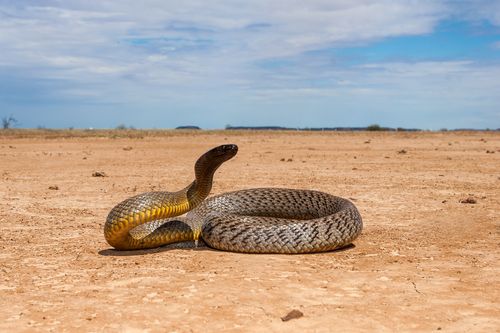
Australia is known for being home to the majority of the world’s most deadly snake species, including the top three: the inland taipan, the eastern brown snake and the coastal taipan.
However, deaths from snake bites in Australia are fairly rare, averaging two or three each year.
As well as rapid access to antivenoms and other treatments, this is in large part because snakes typically avoid built-up urban centres, with many city-dwellers rarely sighting one unless they take to bushwalking.
The international research team – which included scientists from the Australian Institute of Tropical Health and Medicine – used computer modelling to study the overlap between all 508 medically significant venomous snake species and human populations.
They then modelled how these would shift due to changes in the global climate by 2050 and 2090.
Of all of Australia’s venomous snakes, they found the eastern brown had the highest overlap with humans, followed by the coastal taipan.
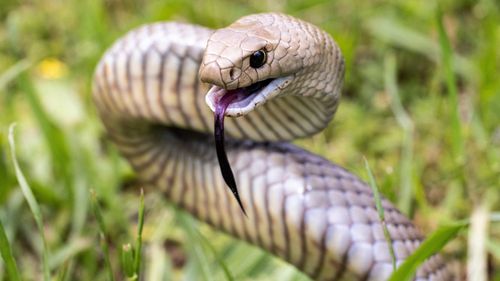
The eastern brown snake is the second most venomous snake in the world and is responsible for most of the country’s fatal snake bites.
However, by 2050, changes to Australia’s climate would see the eastern brown’s range expand south, especially along the highly populated east coast, the study found.
At the same time, inland species such as the inland taipan would see their range across northern and inland Australia shrink.
“Before this study surprisingly little was known about the exact distribution of many medically important snakes, even some widespread ones that cause many bites,” the study authors said.
“Our predictions can be used to decide where to stockpile which antivenom, how to ensure adequate capacity of individual health facilities, how to improve health care accessibility of remote at-risk communities, and where to focus conservation efforts for threatened snake species.”
NEVER MISS A STORY: Get your breaking news and exclusive stories first by following us across all platforms.