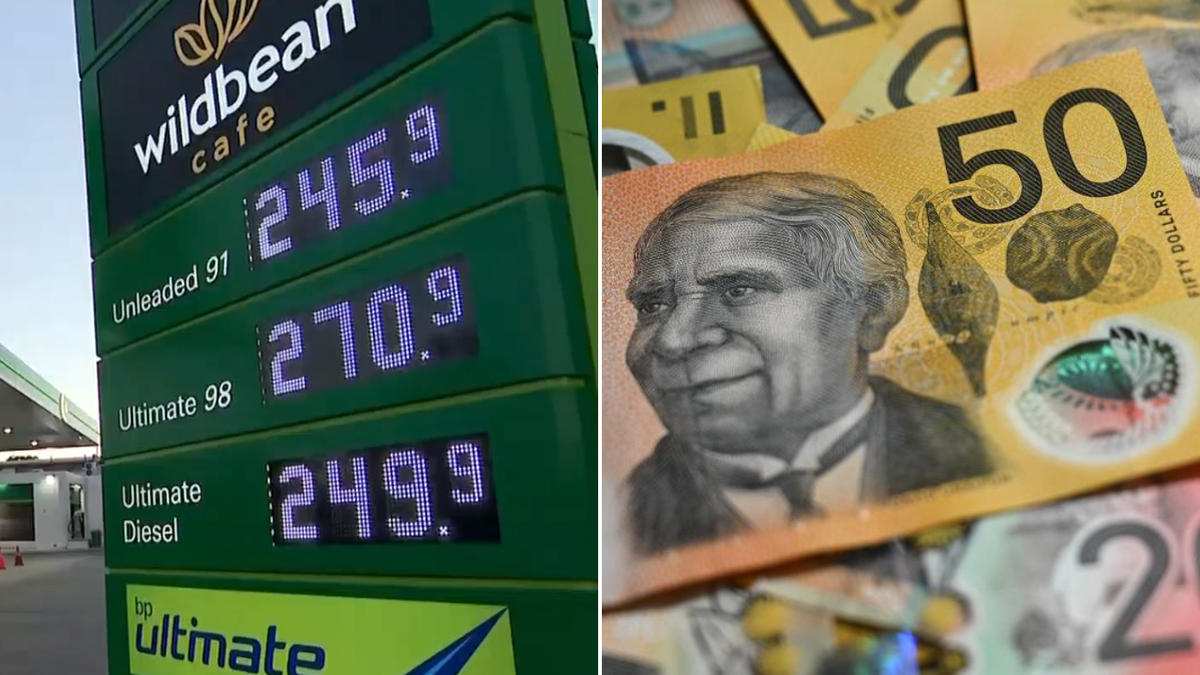

The federal government has touted a budget focusing on fuel security and petrol prices with a nearly $15 billion package to “shield” Australians from the Middle East war impacts on oil.
However, the government’s celebrated move to halve the fuel excise will end in six weeks — which is set to throw household budgets back into crisis.
The fuel excise cut was in response to the conflict in the Middle East continuing to drive global oil volatility, with the government warning the crisis is compounding cost-of-living pressures and disrupting supply chains across the world.
Know the news with the 7NEWS app: Download today
The budget did not include an extension to the fuel excise reduction which was introduced earlier this year alongside cutting the heavy vehicle road user charge for three months.
But those three months are nearly up.
The budget instead introduced $7.5 billion in spending on a Fuel and Fertiliser Security Facility aimed at securing additional international fuel supplies and strengthening Australia’s near-term reserves.
It also will also invest $3.2 billion into a new Australian Fuel Security Reserve and increase the Minimum Stockholding Obligation to lift diesel and jet fuel reserves to 50 days.
“The cut in the fuel excise comes off in about six weeks from now and that’s going to throw an extra 20, 30 cents a litre back onto the pocket,” political scientist Simon Jackman told 7NEWS.
“So much of this budget got telegraphed. I was waiting to see if they’re going to surprise us by extending that one forward. No.
“So the government gives, the government takes with respect to cost of living on this one.”

In his budget speech, Chalmers said the war had been “pushing up prices, pushing down growth, and punishing Australians”.
The government said its focus was on easing pressure at the bowser while also preparing Australia for future fuel shocks through long-term resilience measures.
“The conflict in the Middle East is weighing heavily on our economy and compounding the cost of living for families and businesses,” the government said in budget papers.
“We’ve acted to shield Australians from the worst of its impacts, by delivering relief for motorists and acting on fuel supply, affordability and security in this Budget.”
However, experts say without the fuel excise cut continuing the impact on households will be harsh in six weeks’ time.
Other budget measures
For driving and road users, the budget included other measures like $67.7 million over four years to the Australian Competition and Consumer Commission to strengthen enforcement powers and crack down on price gouging and anti-competitive behaviour in the fuel sector.
It also includes support for businesses struggling with rising freight and supply chain costs.
“We’re helping businesses and manufacturers bolster supply chains, with $1 billion in interest free loans through the National Reconstruction Fund and incentives to get more freight moving on trains and ships,” Chalmers said.
The loans will be delivered through the National Reconstruction Fund’s Economic Resilience Program to support manufacturing and logistics businesses operating in critical supply chains.
Electric vehicle and cleaner fuel investments remain a key focus of the government’s longer-term energy strategy.
Eligible electric vehicles will continue receiving a permanent 25 per cent fringe benefits tax discount for cars priced below the fuel-efficient luxury car tax threshold.

Another $40 million over four years will be invested into expanding fast kerbside EV charging infrastructure nationwide.
Chalmers described the measures as an “investment in our long-term fuel resilience”.
The government will also roll out a $1.1 billion Cleaner Fuels Program designed to increase production of low-emission fuels domestically and reduce reliance on imported fuel supplies.