A “super El Niño” gathering strength in the tropical Pacific Ocean raises the likelihood of warmer and drier weather for large parts of Australia in coming months.
El Niño — the climate condition when seas are unusually warm — can upturn usual weather patterns in winter and spring.
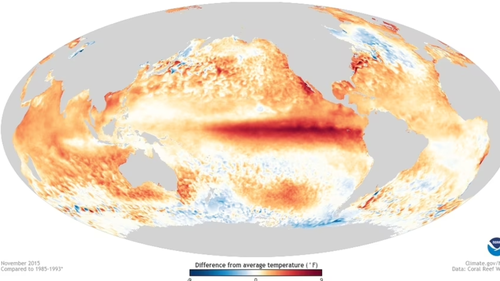
What’s driving the meteorological phenomenon is a huge slab of warm water sitting up to 250 metres below the central equatorial Pacific Ocean.
“These above-average sub-surface temperatures have strengthened in the last couple of months, with anomalies exceeding 6 degrees in some areas,” Weatherzone said.
“It’s possible that these warm sub-surface waters will upwell towards the surface in the coming weeks and months, which could kick off El Niño.”
The possibility of El Niño developing is also backed by consensus in global weather forecast modelling.
The US National Oceanic and Atmospheric Administration Climate Prediction Centre’s latest forecast shows there is a 25 per cent chance of a very strong El Niño in the latter half of this year.
What will happen in Australia?
While El Niño can happen without any major weather changes, it makes some conditions more likely in winter and spring.
Records over the past decade show huge parts of eastern Australia usually experience less rainfall and higher-than-average seasonal temperatures outside tropical regions during El Niño.
Mornings in winter and spring can be unusually cool due to clearer skies.
Spikes in temperature also bring greater evaporation, and together with lower rainfall, raises the risk of drought in some parts.
Lower snow depths in alpine regions also raises the chance of a shorter ski season.
But meteorologists at Weatherzone say even with a stronger El Niño, these conditions in coming months are far from certain.
“It is important to point out that stronger events do not always mean bigger weather impacts and even a weak El Niño can cause significant weather and climate impacts in Australia.”
NEVER MISS A STORY: Get your breaking news and exclusive stories first by following us across all platforms.