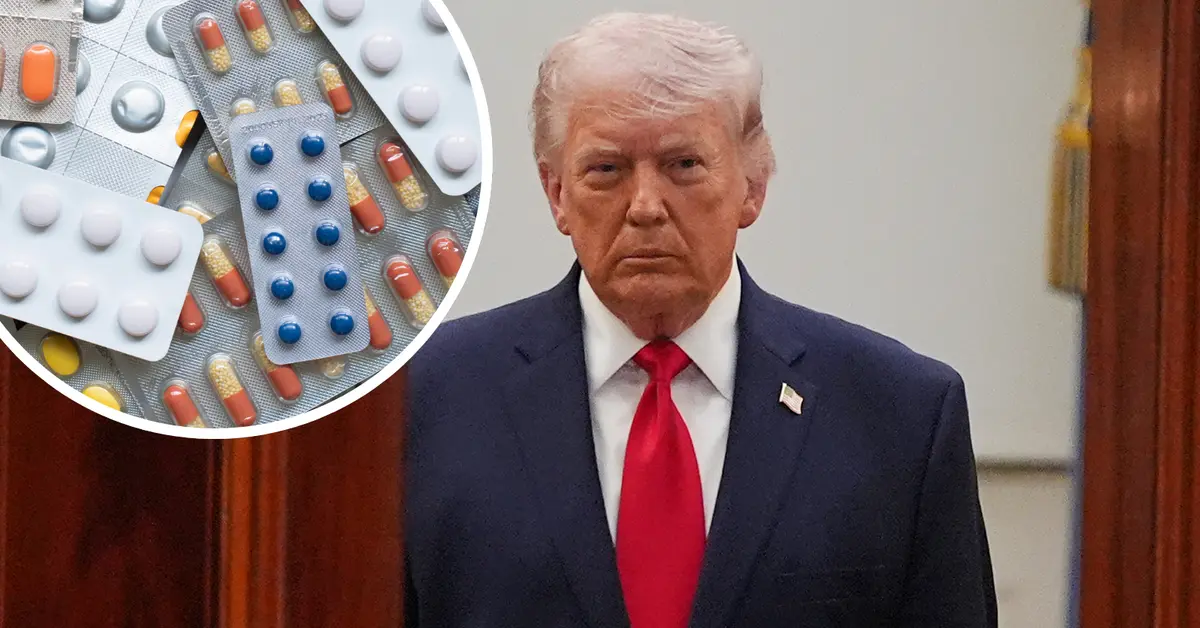

Donald Trump has followed through on his threat to hit pharmaceuticals entering the US with tariffs, and Australia has been slapped with the highest charge, but Australia’s largest manufacturer is expected to dodge the costs.
The US president has imposed a 100 per cent tariff on some pharmaceuticals manufactured outside the US, potentially dealing a heavy blow to one of Australia’s biggest exports to the country.
Trump signed the order overnight, but it won’t take effect for some months.
Pharmaceuticals are one of Australia’s biggest exports to the US, amounting to about $1.6 billion in 2023-24.
The bulk of the sector’s value comes from one company, CSL, a major producer of blood plasma products based in Melbourne.
Given that CSL already have a facility in the US, there is confidence it will be exempt from the incoming costs.
The tariff do not yet apply to generic drugs, and there are carve-outs for companies that manufacture their products or intend to in the US.
Instead, the target of the tariffs is firmly on patient drugs that are produced outside the US in an effort to pressure foreign manufacturers to move their production to the US and negotiate agreements to sell their medicines directly to Americans.
The long-anticipated levies will take effect for large drugmakers later this summer, following a 120-day implementation period, a senior administration official told reporters. Smaller companies, by contrast, will get 180 days before the tariffs kick in.
“We expect the lion’s share of the world’s patented pharmaceuticals to be building” in the US by then, the senior official said. “They’ve had plenty of warning and we are going forward with it.”
The new order includes a series of exemptions from the 100 per cent tariff, including for any company that strikes a deal to join Trump’s “Most Favoured Nation” initiative.
Drugmakers that agree to move their production to the US will also get their tariff cut to 20 per cent in exchange.
But even without taking those steps, many foreign drugmakers may end up avoiding the hefty tariff because of broader trade deals that several countries have already made with the Trump administration.
Companies in the European Union, Japan, South Korea, Liechtenstein and Switzerland will only be subject to a pre-existing 15 per cent tariff, while UK companies face just a 10 per cent tariff.
Australian exports are subject to a baseline 10 per cent tariff, but despite pre-existing free trade agreements with the US, none have been struck with Trump over pharmaceuticals.
Australia’s Pharmaceutical Benefits Scheme has also been a target of ire among Trump’s trade advisors.
The senior official declined to say how many companies would be hit by the 100 per cent tariff.
“It’s really focused on a lot of deals that have already been made with companies who might be making in Australia, might be making in Austria, might be making in France or other places,” US Trade Representative Jamieson Greer said.
“We have spent the past year hammering out deals with a lot of these companies to make sure they’re building in America, which they are.”
Meanwhile, Health Minister Mark Butler criticised the move, urging the US to reverse the tariffs.
“This is the wrong decision by a partner of a successful free trade agreement that has endured for more than 20 years,” Butler said.
“We want the US administration to think again and to reverse this decision.”
The minister reassured that the tariffs will not have an impact on pharmaceutical prices to customers here in Australia.
The new drug tariffs would represent an initial step toward Trump’s pledge to reconstruct his aggressive trade strategy after the Supreme Court ruled in February that some of his most significant and far-reaching tariffs were unconstitutional.
Until now, many of the tariffs that Trump has levied on other countries have excluded prescription drugs.
The administration has already negotiated deals with more than a dozen drug companies to sell certain medications directly to consumers as part of a “Most Favoured Nation” pricing initiative aimed at lowering drug prices.
As part of those deals, the drug makers escape tariffs for three years in exchange for increased manufacturing investment in the US.
The initiative includes selling medications directly to consumers on TrumpRx, but that measure only covers a limited number of drugs so far, many of which have generic alternatives that can be found cheaper elsewhere.
NEVER MISS A STORY: Get your breaking news and exclusive stories first by following us across all platforms.