
Workers’ leave entitlements are held as a liability for when they need to be paid out. This often needs to be done at short notice – for example, during redundancies or when employees bring forward plans for long service leave.
Jeffery told the meeting that it made her “deeply uncomfortable” – both as a certified accountant and as the relative of a retired nurse – for an organisation to spend entitlements that belonged to workers.
The hospital director said the health service had managed to deliver exceptional care and not yet cut back on local services despite its financial pressures.
“I feel like we’ve done our part, and we need government to do their part.”
She concluded her remarks with applause from the audience.
Seymour Health chair Helen Hull reassured AGM attendees that the hospital had sought a so-called letter of comfort from the department that it would bail out the health service if it was liable for entitlements it did not have cash reserves for, according to two people in attendance.
Loading
One of those attendees, speaking to The Age on the condition of anonymity, said they were now worried as to whether their health service would be able to pay doctors and nurses their future leave entitlements after the next natural disaster.
Seymour was inundated during the 2022 floods, and nearby catchments also received record-breaking rain in early 2024.
Jeffery and Hull declined to comment when approached by The Age on Wednesday. Seymour Health’s chief executive also declined to comment.
The health service’s latest annual report says the previous 12 months had been “very challenging from a financial perspective” for the entire healthcare sector.
Loading
“Despite this, we have managed to maintain high levels of activity to meet the ever-increasing demands as our population grows; however, it has come at a cost with Seymour Health experiencing a significant deficit for the first time in over a decade,” the joint report by the chief executive and chair reads.
“Management had in place a Financial Management Improvement Plan that realised over a million dollars of savings and efficiencies; however, we still finished the year with a $1.2m deficit [the operating financial result after capital and specific items], which was funded from cash reserves.”
The Age asked the Department of Health on Wednesday whether all public hospitals were expected to use untied funds to reduce their deficits, as well as how many health services had sought letters of comfort regarding workers’ leave entitlements.
A spokesperson said only Seymour Health had requested a letter of comfort related to untied funds and debt in 2025-26. The spokesperson denied that hospitals had been directed to use workers’ leave entitlements for operational deficits.
“There has been no change to the way hospitals treat employee entitlements,” they said.
However, one senior hospital source said drawing upon untied funds had been a discussion since at least 2024. A second said they were not aware of this particular issue but would never dip into workers’ leave entitlements.
Coalition health spokeswoman Georgie Crozier said she found the claims disturbing.
“Labor’s mismanagement of the budget means cuts to services, loss of jobs and forced amalgamations,” she said.
This masthead approached Health Minister Mary-Anne Thomas to ask if she was aware of this matter and whether she was concerned about a public hospital dipping into cash reserves set aside for workers’ leave entitlements.
Loading
In response to those questions, a government spokesperson insisted the allegations aired at the AGM were false.
“Health services will never be directed to dip into workers’ leave entitlements,” the spokesperson said. “In the last year alone, we delivered a record $9.3 billion boost for our health services – giving every public hospital the certainty to plan for the future and keep delivering the world-class care Victorians rely on.”
Hospital funding has been a major issue ever since the state Labor government flagged, then backed down on, mandatory health service amalgamations and last year demanded cost savings that triggered a fierce backlash from hospital executives.
Nationals MP Annabelle Cleeland, whose state seat of Euroa takes in Seymour, said the government was desperate to hide its funding failures.
“That is not responsible budgeting. It puts both workers and patients at risk.”

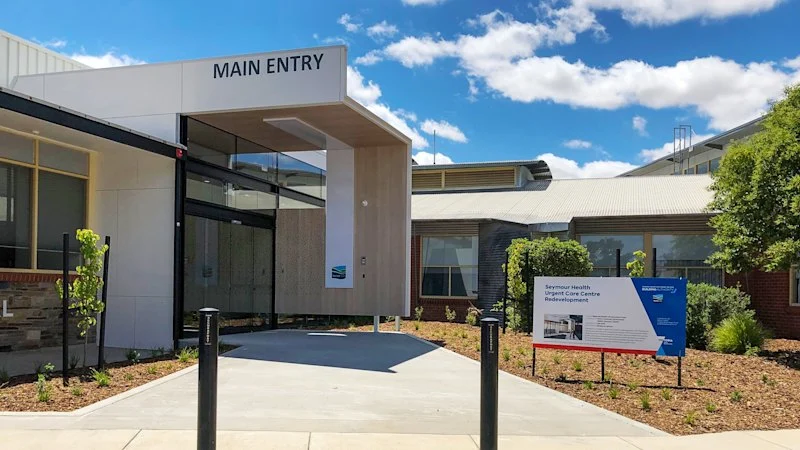
Local MP Annabelle Cleeland outside Seymour Health.
A senior Labor source, speaking on the condition of anonymity, conceded health spending was one of the areas key ministers were most worried about given global trends and Victoria’s debt levels.
Victoria’s net debt is forecast to hit $194 billion by 2029, at which time interest expenses are forecast to be $9.2 billion a year. The government is set to announce cuts to hundreds of senior public service roles and a plan to amalgamate government agencies in the coming days as part of the cost-cutting Silver review.
While Victoria’s health services received record funding this year, hospitals have also been asked to shore up their bottom lines.
Loading
Globally, recurrent health spending is eating up a larger chunk of government budgets due to a multitude of factors, including the financial pressures that come with ageing populations.
Shareholder activist Stephen Mayne, a former Liberal staffer turned independent councillor, said that when he was initially elected to local government one of his first financial briefings warned about councils dipping into worker entitlements.
“The guy [doing the training] said the first sign of financial trouble at a council is tucking into leave entitlements for operating costs,” Mayne said.
Last week, The Age revealed that Melbourne Health, which operates the Royal Melbourne Hospital, had used public donations to help fund a new security control room amid a drastic rise in violent incidents.
This masthead also revealed last month that two key performance measures – how many days’ cash hospitals had available at the end of each month, and the average time it took them to pay trade creditors – had quietly disappeared from health service annual reports.
Start the day with a summary of the day’s most important and interesting stories, analysis and insights. Sign up for our Morning Edition newsletter.