

The federal government has unveiled Australia’s emissions reduction target for 2035, and announced billions in extra funding to help the nation reach the goal while at the same time boosting the economy by trillions of dollars, increasing average wealth by $36,000 per person.
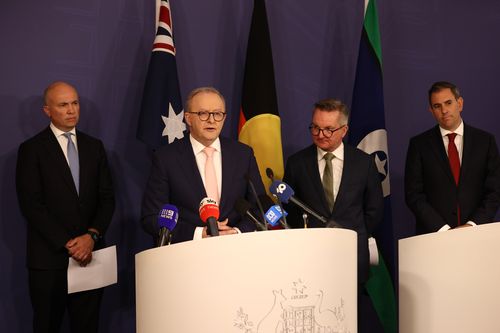
Prime Minister Anthony Albanese announced today that the nation would aim to reduce total carbon emissions by 62 per cent to 70 per cent, compared to 2005 levels.
“This is a responsible target supported by science and a practical plan to get there and built on proven technology,” he said.

“It is the right target to protect our environment, to protect and advance our economy and jobs, and to ensure that we act in our national interest and in the interest of this and future generations.”
The target is more ambitious than New Zealand’s goal of 51 per cent to 55 per cent, but far less so than the United Kingdom, which has a legal commitment to reduce emissions by 81 per cent compared to 1990 levels.
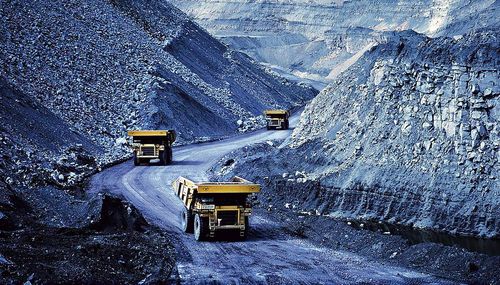
The government also outlined new plans to help Australia achieve its goal, including a new $5 billion net zero fund to support mining and heavy industry to reduce emissions, as well as millions in extra funding to roll out curbside fast charging for electric vehicles.
However, the government is already facing criticism that the 62 per cent to 70 per cent target is incompatible with keeping warming to that level.
“It prioritises fossil fuel profits and business interests over people, and effectively abandons our commitment under the Paris Agreement to collectively limit global heating to 1.5 degrees,” Greenpeace Australia Pacific’s Shiva Gounden said.
“It means homes and lands inundated by floods and rising seas; prolonged droughts and severe heatwaves decimating our agriculture and fisheries; the places and wildlife we love ravaged by infernos; our unique cultures and ways of life eroded.”
However, the government defended its target, which was recommended by the Climate Change Authority, saying it was the most ambitious yet achievable goal it could set out.
“The Climate Change Authority chair made it clear,” Energy and Climate Minister Chris Bowen said.
“They were obliged under law to consider 1.5… a target over 70 is not achievable, that advice is clear.
“We have gone for the maximum level of ambition that is achievable.”
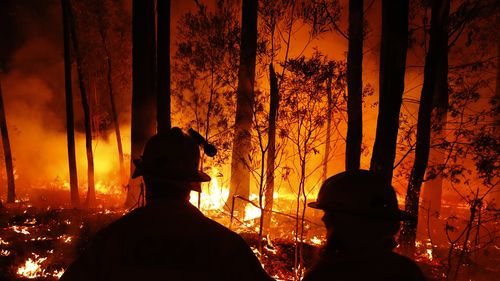
Scientists, as well as marine conservation, wildlife, emergency responder and bushfire survivor groups, have also labelled the target as too weak, but Albanese said he was also expecting to face criticism that it was too high.
“We think we have a sweet spot,” he said.
“There will be criticism from some who say it is too high, some who will say it is too low.
“What we have done is accept the Climate Change Authority’s advice and, importantly, this is world’s best practice.”
Multibillion-dollar plan to achieve target
Alongside the target, the government released its official “Net Zero Plan” – a 125-document outlining the steps and initiatives required to reduce emissions by 62 per cent to 70 per cent by 2035, en route to 100 per cent by 2050.
Included in the plan is the establishment of the new $5 billion net zero fund within the National Reconstruction Fund, as well as a further $2 billion for the Clean Energy Finance Corporation and $1 billion to produce clean fuels in Australia.
Treasurer Jim Chalmers said managing the transition towards a decarbonised nation would provide a multitrillion-dollar boost to the economy, according to Treasury modelling, and that it was a “golden economic opportunity” that Australia “would be mad not to grasp”.
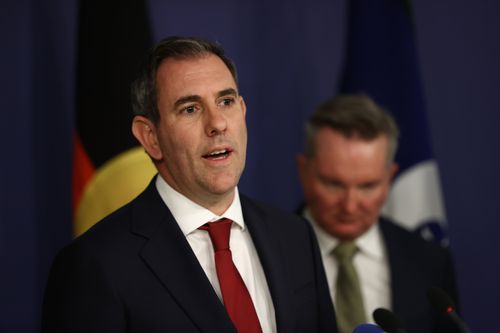
But he also warned the cost would be enormous without government support.
“The baseline scenario would see our economy $2.2 trillion bigger by 2050 and an extra $36,000 per person wealthier, with 5.1 million more jobs and investment up 80 per cent,” he said.
“We also asked Treasury to model the disorderly transition, the alternative if we leave the heavy lifting to others at the start of the 2040s and where our country and economy would need to scramble to hit net zero by 2050,” he added.
“And in the disorderly transition, the economy would be a cumulative $1.2 trillion smaller than the baseline scenario.”
The Business Council of Australia welcomed the net zero plan, but said the 62 per cent to 70 per cent target would be challenging and would require “exceptional collaboration” between the government and private sector.
“We strongly support net zero by 2050, and getting this right is about balancing the needs of future generations while ensuring Australian industry can continue to compete in the global market today,” chief executive Bran Black said.
“The BCA has long called for a clear plan, along with ambitious but achievable targets that give business investment certainty and enable the continued delivery of affordable and reliable energy, as we move towards net zero.
“The announcements today… are welcome steps towards closing funding gaps and increasing the investment needed to meet 2035 targets and set our economy up.”

Greens lament ‘utter failure’ while Coalition tosses up net zero abandonment
Both the opposition and Greens have hit out at the government’s plan, although for vastly different reasons.
Greens leader Larissa Waters slammed the 62-70 per cent target as “appalingly low”, saying it was manifestly inadequate to prevent the worst impacts of climate change.
“This utter failure of a climate target is a betrayal of Australian communities and the planet in favour of coal and gas corporate profits,” she said.
She also claimed the funding included in the net zero plan was “a pitiful amount of money to allocate to the clean energy transition when it’s about two-thirds of what they give every single year to coal and gas companies in cheap diesel and accelerated depreciation”.
The Greens had been pushing for a target of net zero emissions by 2035.
The opposition, meanwhile, claimed the 62-70 per cent reduction was too high.
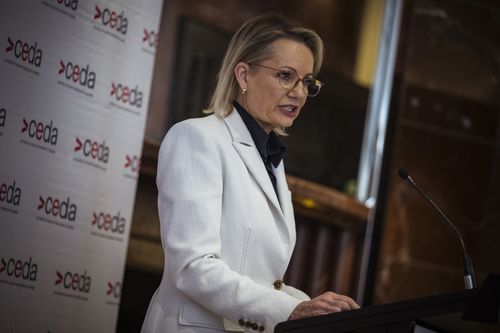
“This is grounded in fantasy land,” Opposition Leader Sussan Ley said.
“Targets must be achievable and realistic. And these are not.
“If the government wants to have an honest conversation with Australians, they need to be upfront about announcements they make in critical areas of energy,” she added.
“They need to be upfront about what it will actually cost. Australians deserve to know this.”
At the same time, the Coalition is considering whether to keep or abandon net zero by 2050 as a policy.
Dan Tehan has been tasked with reviewing the Liberals’ energy plan, but there is no deadline for when a decision will be made.
Earlier this week, prominent conservative frontbencher Andrew Hastie – who is considered a potential future leadership rival for Ley – said he would quit shadow cabinet unless the party abandons its net zero policy.
Fellow shadow minister Jonno Duniam later suggested there would be a mass exodus from the Coalition frontbench if the policy is retained, although Ley has sought to reassure voters that the opposition is serious about action on climate change.