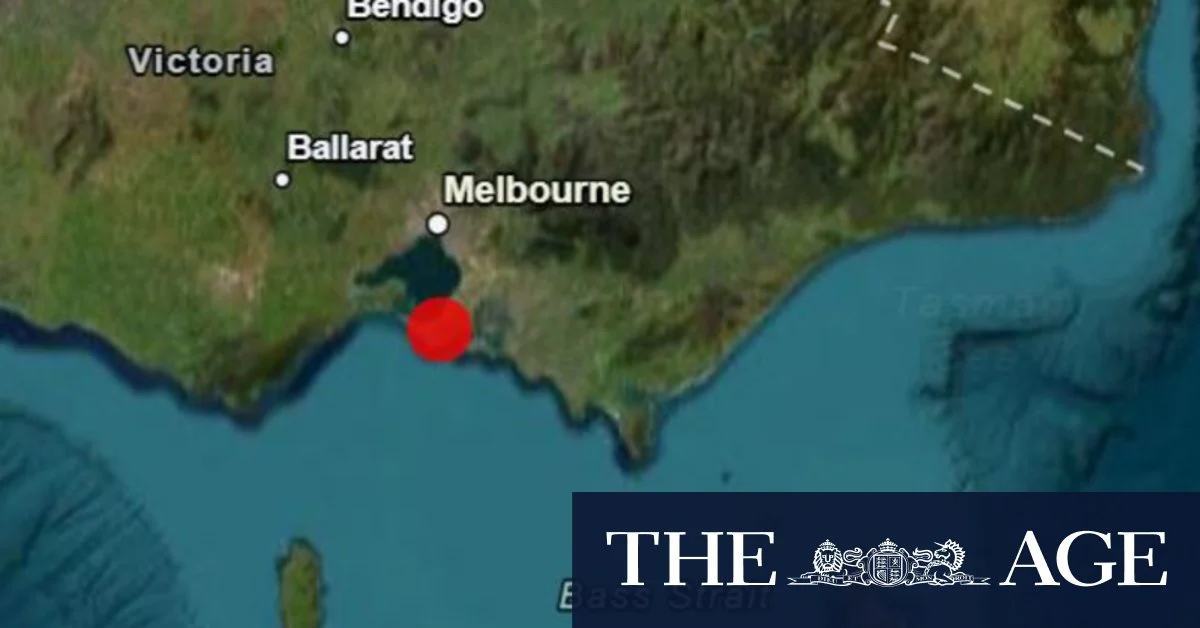

Geoscience Australia senior seismologist Dr Jonathan Griffin said many people reported the quake as sounding like thunder or “a truck rolling”.
“Which is common for some of these smaller, shallower quakes … as these seismic waves reach the surface, they get converted into sound waves,” said Griffin.
“An earthquake of this magnitude, it’s not particularly large, but it’s enough to give you a good shake and potentially wake you up.”
Seismology Research Centre chief scientist Adam Pascale said earthquakes of this strength were not known to cause damage.
Loading
“Usually magnitude 3 is going to be felt quite widely – over tens of kilometres – but we usually don’t see damage until we get to about magnitude 4 and above,” he said.
Pascale said there was a fault line running along the Mornington Peninsula that made earthquakes more common in the area.
“Activity in that area is not unheard of but certainly not as much as you might see in Gippsland or through the Great Dividing Range,” he said.
“I think the most significant one was in 1971 off Flinders … but this is the largest for a number of years [since] I think in the late 90s.”